The Essential Food and Drink Guide to European Christmas Markets
Glenn
Admin at WWG
 +1 media
Street dining in sub-zero temperatures is an art form across Germany, Austria, France, and Central Europe. Here is what you should order, what to look for on the chalkboards, and how to navigate the market food culture like a seasoned regular.
1. The Glühwein Routine and the Ceramic Mug Custom
Nothing cuts through a sharp December frost quite like the first sip of hot spiced wine. You smell it long before you reach the stall: a rich steam of simmering red wine infused with whole cinnamon quills, cloves, crushed cardamom, and thick slices of orange.
In Germany and Austria, it is Glühwein; across the French border in Alsace, you will ask for Vin Chaud.
The Local Ritual (Pfand): When you place your order, the vendor will charge you a few extra Euros (usually between €2 and €5) on top of the drink. This is the Pfand (deposit) for the collectable ceramic mug, painted with the city's name and the year. You can bring the mug back to any drinks stall to reclaim your coins, or pocket the mug as an authentic souvenir of your trip.
Insider Tip: If the standard red wine feels too heavy, look out for Weißer Glühwein (made with crisp local white wine, citrus, and apple) or ask for your mug mit Schuss (spiked with a shot of dark rum, amaretto, or cherry schnapps).
2. Sizzling Charcoal Grills: Käsekrainer and Nürnberger Sausages
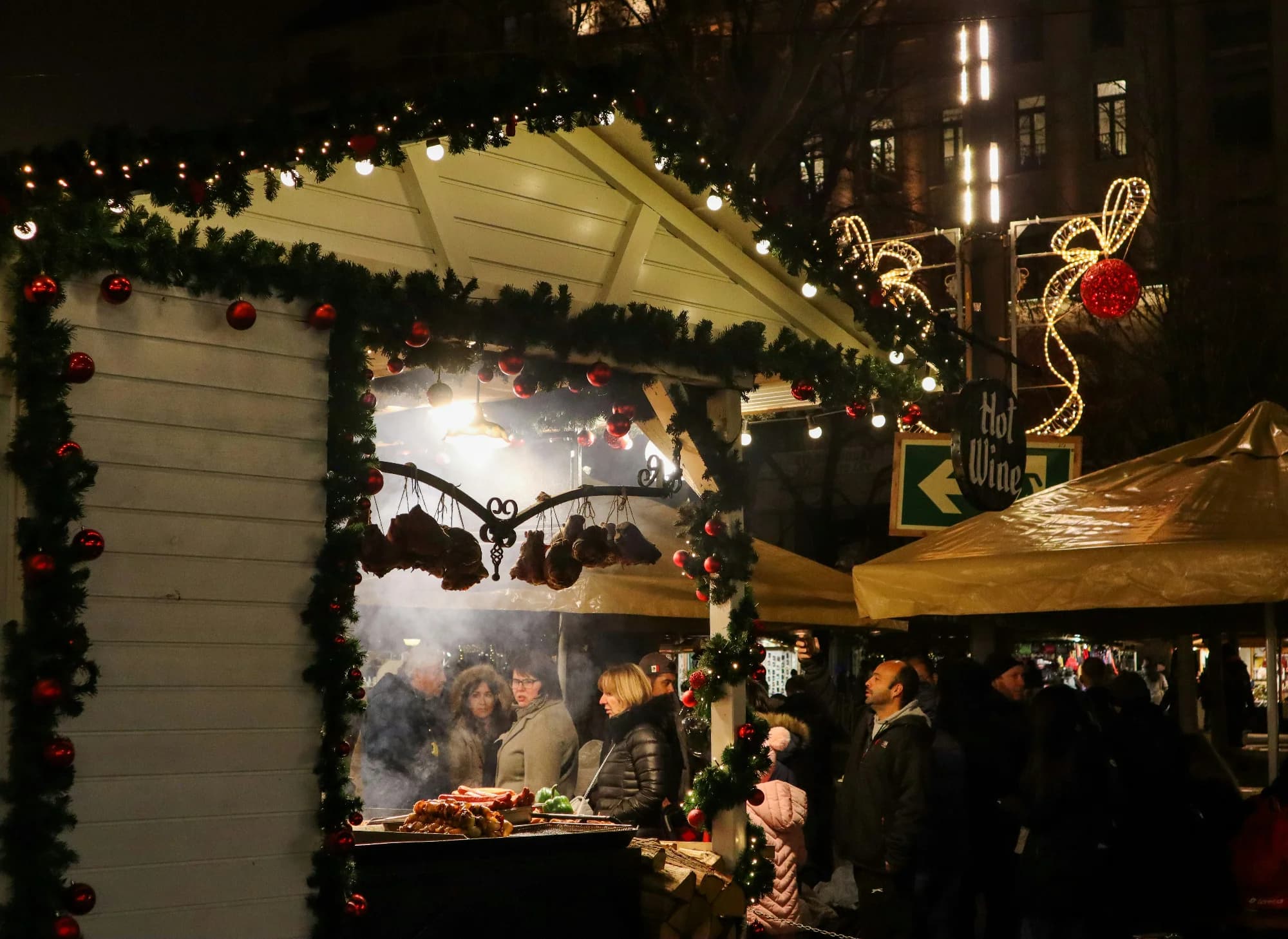
Follow the thick plume of woodsmoke to find the Schwenkgrill, a giant circular iron grate suspended by chains over glowing charcoal coals. Watching the grill master push dozens of sizzling sausages across the iron bars with metal tongs is pure theatre.
While a classic pork Bratwurst in a crisp, crusty roll with spicy mustard is great, there are far better regional specialities to try.
What to Order: In Austria, ask for a Käsekrainer. This lightly smoked pork sausage is studded with small chunks of Emmental cheese. As it cooks over the coals, the cheese melts completely; when you bite into the crisp casing, molten cheese pockets ooze out.
The Regional Classic: If you are in Bavaria or Nuremberg, look for Drei im Weggla. This is three small, finger-length pork sausages heavily spiced with fresh marjoram, tucked snugly into a sliced hard roll.
3. Molten Mountain Comfort: Raclette and Tartiflette
When the evening temperature drops well below freezing, you need serious mountain fuel. Alpine stalls bring giant half-wheels of rich, pungent cow's milk cheese right to the front of the wooden counter, placing them under glowing electric heaters.
As the top layer bubbles, browns, and turns gooey, the vendor takes a flat knife and scrapes a generous, steaming blanket of cheese directly over a mound of boiled new potatoes, crusty sourdough bread, and tangy cornichons.
The French Alternative: Keep your eyes peeled for Tartiflette, cooked in massive iron pans the size of cartwheels. It is a hearty bake of sliced potatoes, smoked bacon lardons, and sweet onions deglazed with dry white wine, topped with entire rounds of melting Reblochon cheese. You can smell the rich, creamy goodness halfway across the square.
4. Trdelník: Fresh Pastry Off the Coals
In Prague, Vienna, and Budapest, the sweet scent of baking dough and vanilla sugar hangs over every street corner. Trdelník (or Kürtőskalács in Hungary) are chimney-shaped pastries made by wrapping thin ribbons of sweet yeast dough around thick wooden or metal rolling pins.
The dough spits are basted in melted butter and rotated slowly over red-hot charcoal until the exterior turns golden and crisp while the interior stays pillowy and soft.
How to Enjoy It: The moment it slides off the hot spit, the pastry is rolled in granulated sugar, cinnamon, and finely crushed walnuts. Eat it while it is too hot to hold, peeling the ribbons apart in steaming coils. Avoid stalls offering to fill the centre with whipped cream or soft-serve ice cream; the plain, hot, sugar-dusted pastry straight from the coals needs nothing else.
5. Fresh Potato Pancakes and Warm Spiced Gingerbread
If you need a quick savoury bite between drinks, look for the stalls with large, shallow frying pans bubbling with oil. Here you will find Reibekuchen (or Kartoffelpuffer in Austria), traditional potato pancakes grated with onion, bound with egg, and fried until the edges are dark brown and incredibly crunchy.
They are handed to you smoking hot on a small paper tray, accompanied by a cold scoop of sweet, tart applesauce (Apfelmus). The contrast between the salty, crisp potato and the cold fruit puree is brilliant.
For the Sweet Tooth: Skip the decorative, rock-hard gingerbread hearts hung on ribbon (which are made purely for display) and seek out genuine Elisenlebkuchen. These traditional spiced biscuits are made almost entirely of ground almonds, hazelnuts, and orange peel on a thin wafer base, lightly glazed with dark chocolate.
Ready for a Festive Food Tour?
Sampling your way through Europe's finest festive squares is the ultimate winter indulgence, especially when you have a cosy, central hotel room waiting just around the corner.
Browse our Christmas market packages now to lock in central city stays, convenient flight times, and low deposits.